By at .

Middle East Archives - Silk Road Diary
browser icon
You are using an insecure version of your web browser. Please update your browser!
Using an outdated browser makes your computer unsafe. For a safer, faster, more enjoyable user experience, please update your browser today or try a newer browser.

Middle East

Roasted Quail Feast for Valentines Day

Exotic, aromatic and romantic we prepared this intimate feast with a table for two in mind. Succulent quail are roasted to perfection with one of our most alchemical blends: Ras el Hanout, which contains a hint of Moroccan rose petals and finished with a finger licking honey glaze.  Our  Wild Rice Pilaf accompaniment features the bold, classic flavor of cassia cinnamon while the  Paradise Pistachio Relish combines grains of paradise and Aleppo to bring everything together for a memorable Valentine’s Day Feast, we’ll leave the desert up to you. 

Honey Roasted Quail

Honey Roasted Quail with Wild Rice Pilaf and Paradise Pistachio Relish


Honey Glazed Roasted Quail

Ingredients

For the Quail Brine
1/2 gallon water
Ice, about 2 quarts
1/2 cup kosher salt
1/2 cup brown sugar
10 long Pepper, whole
3 tablespoons Indian coriander, whole
2 tablespoons allspice berries, whole
2 tablespoons rose petals
Peel from one lemon
For Roasting
1 tablespoon Ras el Hanout
4 tablespoons unsalted butter
2 tablespoons rose petals
For the Honey Glaze
3/4 cup honey
2 teaspoons Indian coriander, whole

Instructions

  1. For the Brine - Bring water to a boil in a large stock pot.
  2. Once boiled, remove from heat and add sugar and salt.
  3. Stir until sugar and salt have dissolved.
  4. Add enough ice to bring water volume to 1 gallon
  5. Once the brine has cooled, add quail and spices and refrigerate for 2 1/2 hours
  6. Preheat over to 450 degrees
  7. Remove quail from brine and pat dry with paper towels Set aside to bring to room temperature, about 30-40 minutes
  8. While quail are setting, melt butter in a small skillet
  9. Add Ras el Hanout, whisk and remove from heat
  10. Apply butter/Ras el Hanout mixture liberally to quail
  11. Roast quail, preferably on a grill rack, for 12-17 minutes
  12. While the quail roasts, prepare the glaze:
  13. In a small saucepan, heat honey and coriander over medium heat, stirring often, until honey is reduced by half, about 8 minutes
  14. Discard coriander seeds
  15. With a pastry brush, glaze the roasted quail with honey.
  16. Finish with Sel de Mer
  17. Serve with rice pilaf and pistachio relish (recipes below)
http://www.silkroaddiary.com/honey-glazed-roasted-quail/

 
Wild Rice Pilaf

Ingredients

1 cup wild rice
3-3 1/2 cups chicken or vegetable stock
1/2 medium yellow onion
2 cloves garlic, diced
4 tablespoons dates, chopped
2 tablespoons olive oil

Instructions

  1. In a small saucepan, brink stock to boil
  2. Add rice, cinnamon stick and bay leaf
  3. Reduce heat and simmer until rice kernels open, about 45-50 minutes
  4. While rice cooks, saute onion on medium heat until lightly browned, about 10 minutes
  5. Add garlic to onions and continue sauteing until garlic is lightly browned
  6. When rice is nearly cooked, add onion/garlic mixture, and dates
  7. Cover and until the dates have dehydrated, about 10 minutes
  8. Season with salt to taste
http://www.silkroaddiary.com/honey-glazed-roasted-quail/

 
Paradise Pistachio Relish

Ingredients

1 cup shelled, unsalted pistachios, toasted and roughly crushed (use the bottom of a bowl)
3 tablespoons flat leaf parsley, chopped
3 tablespoons fresh mint, chopped
1 clove garlic, crushed
Zest and juice of 1 lemon
2/3 cup extra virgin olive oil
1 tablespoon Aleppo pepper flakes
1 teaspoon grains of paradise, ground
Salt to taste

Instructions

  1. Combine pistachios, parsley, mint, garlic and lemon in a mixing bowl
  2. Slowly add olive oil, mixing as you go
  3. Add Aleppo, grains of paradise and salt
  4. Cover and allow to sit at room temperature for 1 hour
http://www.silkroaddiary.com/honey-glazed-roasted-quail/

Categories: Global Cuisines, Holiday, Main Meals, Middle East, North America, Recipes, Sides, Spice Notes | Tags: , , , , | Leave a comment

Heavenly Hawaij Soup

This decadent  mushroom soup wowed us at our last tasting. The fusion of the aromatic cardamom, turmeric and saffron in the essential Yemenese blend combined with mushrooms and cream to make one heavenly bowl of soup. We added Porcinis for a meaty richness and additional depth of flavor.  This exotic twist on an American classic is perfect as a soup shot for a holiday party or on those chilly winter nights.

.


Heavenly Hawaij Soup

Ingredients

3 tablespoons butter
5 large garlic cloves, chopped
1 small sweet onion, chopped
2 tablespoons flour
1 ounce (about 1 cup) dried Porcinis, broken into smaller pieces
2 pounds chopped Crimini mushrooms
4 cups vegetable or chicken stock
1 cup white wine
2 tablespoons Hawaij, ground
1-1/2 cups heavy cream
1/2 lemon, juiced
Salt to taste

Instructions

  1. In a Dutch oven, melt the butter on medium heat. Saute the garlic and onions until slightly browned. Add the flour, and mix well. (It will be thick.) Add in the Porcinis, Criminis, stock, wine and Hawaij. Mix well. Bring to a boil, then turn down the heat to medium low, and let simmer for about 20 minutes.
  2. Working in batches, puree the soup in a blender or food processor until smooth. Once the soup is pureed, return it to the pot and add the heavy cream. Simmer for about 10 minutes, to reduce the cream a bit. Add the juice of 1/2 of a lemon, then taste for salt and add what you need. If you feel the soup is too thick, add more stock. If you feel it needs to be thicker, continue to reduce it on low until it’s at the consistency you prefer. Serve with a drizzle of extra virgin olive oil.
http://www.silkroaddiary.com/hawaij-cream-of-mushroom-soup/

Categories: Course, Global Cuisines, Middle East, North America, Recipes | Tags: , , , , , , , | Leave a comment

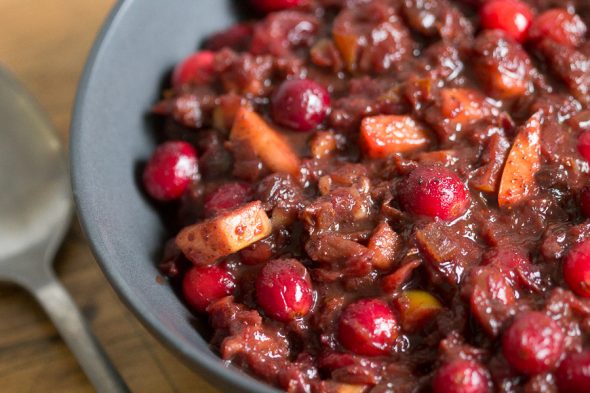
Besar Cranberry Chutney

The rich and toasty taste of our Besar blend makes an ideal compliment for the pop of fresh cranberry flavor in this exotic twist on a holiday classic. The candied ginger and dried apricots round out the fruity flavors, and when you bring it all together, this chutney has a place well beyond the Thanksgiving table when the bounty of winter begins to fade. Go cranberries!

.


Besar Cranberry Chutney

Ingredients

2 Tbl olive oil
1 bag (12 oz) fresh cranberries
1 onion, diced (use a sweet or red onion for extra flavor)
1/4 cup Candied Ginger, chopped
1/2 cup dried apricots, chopped
1 large orange (or 2 medium), zested and juiced
1 lime, juiced
3/4 cup brown sugar
3/4 cider vinegar
3 Tbl Besar, ground

Instructions

  1. Put olive oil in a medium saucepan over medium heat. Add the diced onions and saute for 5 minutes.
  2. Add the rest of the ingredients and, stirring frequently, cooking for about 15 minutes. Taste for seasoning. You might want to add more salt, vinegar or brown sugar.
  3. If you want a 'smoother' sauce, cook for another 10 minutes. Remove from heat. Let cool, then put into a covered container in the refrigerator. This will keep for about a week.
http://www.silkroaddiary.com/besar-cranberry-chutney/


Categories: Global Cuisines, Hot Topics, Middle East, North America, Recipes, Sides | Tags: , , , , , , , , , , , | 1 Comment

Aleppo Pepper Muhammara

This eastern Mediterranean dish is the perfect example of that regions ability to take simple ingredients like nuts, peppers and olive oil…and make something magical by adding a spice such as Aleppo Pepper. The sweet and sharp chile from the Aleppo region of Syria has a moderate heat and fruity flavor that brings a taste of the sunny Mediterranean to every bite. An elegant alternative to hummus, Muhammara will be the easy holiday hors d’oeuvre that your guests adore.

.


Aleppo Pepper Muhammara

Ingredients

2 – 12 oz jars of roasted red peppers
8 oz (or 1-1/2 cups) of roasted walnuts
3 Tbl. lemon juice
1/4 cup olive oil
3 cloves of garlic, smashed
3-1/2 Tbl. Pomegranate Molasses
1 toasted pita, broken into small pieces

Instructions

  1. Put the toasted nuts in a food processor or blender, and pulse until they are broken down into small pieces.
  2. Add the rest of the ingredients and puree until smooth. Taste for seasoning - you might want to add more salt, lemon juice or pomegranate molasses.
  3. You can then transfer to a serving bowl or put in a container for the fridge. It will keep about a week.
http://www.silkroaddiary.com/aleppo-muhammara/

Categories: Global Cuisines, Mediterranean, Middle East, Recipes, Snacky Bits | Tags: , | Leave a comment

Ras El Hanout Plum Preserves

Her name was Edna Nosworthy, and she had the same birthday as I do- only eighty years difference. She had a bottomless stash of Tootsie Rolls, made a mean Snickerdoodle, and had a sprawling green lawn dotted with fruit trees- apples, pears, cherries, and Italian plums. It’s been more than fifteen years since she passed, but I still choke up when I talk about her. Every summer, the other families lucky enough to know Edna would gather in her yard to harvest her fruit, which she would then turn in to vats of phenomenal home goods- pickles, preserves, jams, and pie fillings. What I wouldn’t give to have a Ball jar in my cupboard with her spidery scrawl on it now!

These preserves are an homage to all of the “Greatest Generation” who inspire us to use what we have, and share with our neighbors. The global update is lent by the Moroccan staple, Ras El Hanout, whose complex flavors support and feature the sweet-sour plums. Any variety of plum will do- and the choices abound! A loop around your local Farmer’s Market will alert you to the bumper year it’s been for this stellar stone fruit in the Northwest, or if you’re lucky enough to have an Edna Nosworthy in your life, you’ll opt for Italian, all the way. Serve them over ice cream- as we’ve pictured- or as a dipping sauce for a juicy lamb kebab.

.


Ras El Hanout Plum Preserves

Ingredients

2 lbs. firm-ripe plums, any variety
1/4 cup brown sugar
1/2 cup water
1 cassia stick
1 Tbl. Ras El Hanout

Instructions

  1. Coarsely chop plums and stir together with water, sugar, and cinnamon stick in a 2 quart, heavy saucepan.
  2. Simmer, uncovered, stirring occasionally to prevent sticking, stirring more often as cooking process progresses.
  3. Mixture will thicken and reduce to about 2 1/2 cups within 45 minutes to 1 hour.
  4. Discard cassia stick, and stir in Ras El Hanout.
  5. Cool preserves, and transfer to an airtight container to chill and store.
http://www.silkroaddiary.com/ras-el-hanout-plum-preserves/

Categories: Middle East, North America, Recipes, Sweet Somethings | Tags: , , , , | Leave a comment

Israeli Zahtar Flatbread

After a long day of working (or running errands and doing chores), I just want something quick and easy for dinner, but it still has to be delicious… And if it’s at least somewhat healthy-ish, all the better! I don’t know about you, but I can always eat pizza, in pretty much any form. I can always find ready-made pizza dough at the store, which means my homemade pizzas or flatbreads can be made without any fuss. There’s also something incredibly soothing about rolling out pizza dough, especially after a long day. The smell of the yeast dough always takes me back to childhood when I would help my mother make bread. Working with that kind of dough has an air of tranquility to it…it’s a blank canvas, just waiting for you to do something fun, interesting and flavorful with it. I’ll roll out the dough, brush it with olive oil, then top it with spices. Now it’s ready for me to add fresh colors and flavors. I’ll rifle around in my fridge  or the cupboards of my small kitchen for odds and ends of goodies that I can either put on the dough before I bake it, or after it comes out of the oven. It all depends on my mood at the moment. I have always enjoyed “playing with my food,” and this certainly fits the bill. Israeli Zahtar is my favorite spice to use for this, but I also love Dukka. The smell of the flatbread baking is heavenly, and always seems to perk me up a little bit. It’s a perfect end to a hectic day.

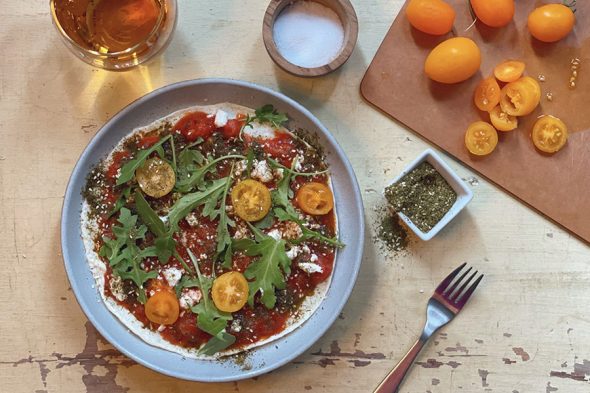
Israeli Flatbread, topped with the salad on the left, and an “untopped” Dukka Flatbread on the right.


Israeli Zahtar Flatbread

Ingredients

1 store-bought pizza dough
1/2 bunch fresh parsley, leaves picked off
1/2 bunch fresh cilantro, leaves picked off
1 pint heirloom cherry tomatoes, quartered (or 2 or 3 whole tomatoes)
1/3 cup feta, crumbled
1/2 small red onion, thinly sliced
1 small lemon, juiced
olive oil (for brushing, drizzling and salad)

Instructions

  1. Heat oven to 425 degrees. Follow instructions on pizza dough package. (Sometimes you have to leave it out for 20 - 30 minutes to 'rest' at room temperature.)
  2. Divide into 3 portions and roll them out thinly - if you roll them into long ovals, and not rounds, they will fit on one cookie sheet. (They will cook more evenly this way.) Brush the cookie sheet with the olive oil and place the dough on it, without any of the sides touching.
  3. Brush the dough with olive oil and sprinkle on the Israeli Zahtar. Bake in the oven until the crust is golden brown cooked through. Since there is only oil and spice on the dough, keep an eye on it so that it doesn't burn.
  4. While the flatbread is baking, you can make the salad that will go on top of it. Combine the rest of the ingredients (except for the lemon juice and olive oil), mixing well.
  5. When the flatbread is done, remove from oven. It will be easier (and less messy) if you cut the flatbread into pieces now before you put the salad on top. Put the cut up flatbread on your serving plates. Add the lemon juice and 2 Tbl. olive oil to the salad and toss to coat. Evenly top the flatbread with the salad.
  6. Feel free to drizzle more olive oil on top before you serve it. Or anything else you choose!
http://www.silkroaddiary.com/israeli-zahtar-flatbread/

Categories: Africa, BBQ, Global Cuisines, Mediterranean, Middle East, Recipes | Tags: , , , , , , | Leave a comment

Dukka and Olive Oil

If you’re like me, when you get home from work dinner-time can’t come soon enough; and nothing beats a simple snack of fresh bread and olive oil while I cook the rest of my meal. There are countless ways to flavor the oil but one of my personal favorites is the Egyptian spice blend Dukka. There is a huge variety of recipes for this blend and references to Dukka show up in texts as early as the 19th century.  We use a blend of toasted spices and hazelnut chunks in ours. The traditional method of eating Dukka is to dip a chunk of bread in a shallow dish of olive oil and then in to a plate of coarsely ground Dukka but to save myself another dish at the end of the day, I usually just mix the oil and Dukka together in a small dish and dip in to that. You can try different types of oils to find out which variety you like best. My favorite is a Greek extra virgin olive oil made with 100% Kalamata olives and for a special treat I love to get a nice fresh loaf of Kalamata olive bread from our friends down at Grand Central Bakery. The uses for this versatile blend go well beyond a delicious dip for bread. Try it as a crust on chicken or lamb or even to make a truly unique savory scone!

Dukka and Olive Oil

Categories: Global Cuisines, Middle East, Recipes | Tags: , , , | Leave a comment

Urfa Biber – Strawberry Ice Cream

Chiles aren’t just for cooking savory food; many are wonderful in desserts, too. Urfa Biber, for example,  is a great pairing with berries or chocolate. At a recent cook-off, we added Urfa Biber to Strawberry Ice Cream with fantastic results.

Urfa Biber and Strawberry Ice Cream, with a little bit of Beet Powder (for extra color).

Urfa Biber and Strawberry Ice Cream, with a little bit of Beet Powder (for extra color).


Urfa Biber and Strawberry Ice Cream

Ingredients

1-1/2 cups heavy cream
2 cups whole milk
1 whole egg
6 egg yolks
2/3 cup light brown sugar
2 cups strawberries, diced
2-1/2 tsp. Urfa Biber
1 Tbl. bourbon, or vanilla extract
2 Tbl. Beet Powder (optional, for color)
1/2 tsp. Murray River Flake Salt (reduce to 1/4 tsp if using sea salt or table salt)

Instructions

  1. Bring milk and cream, bourbon (or extract), and 2 tsp. of the Urfa Biber to a simmer.
  2. In a medium mixing bowl, whisk the egg and yolks together, add sugar and mix until fully incorporated.
  3. Temper the milk and cream mix into the eggs by adding just a small amount of the hot milk at a time, and whisking continuously. Once half of the milk mixture is incorporated into the eggs, the remainder can be added in a steady stream. If care is not taken during this step, the eggs will scramble in the hot cream.
  4. Pour the custard in to the sauce pan, and continue to whisk or stir constantly over medium-low heat to thicken. DO NOT BOIL! The temperature of the mixture shouldn't exceed 180 degrees Fahrenheit at any point during this step. Dip a spoon or spatula into the mixture, and draw your finger across the back of the spoon through the mixture residue on it. If the track from your finger remains, and the mix doesn't run together to cover up the track, it's thick enough.
  5. Pour the ice cream through a fine mesh strainer into a clean, chilled bowl (preferably metal for quicker cooling) and stir in the strawberries, omitting any juice that may have resulted in the bottom of the bowl, the remaining 1/2 tsp. of the Urfa Biber, the Beet Powder (if using), and the salt. Place the bowl over another container filled with ice to cool it quickly. Stir occasionally as it cools. At this point, the mixture can be covered and chilled in the refrigerator for up to 48 hours before being churned. If you're using liquid nitrogen*, you can proceed to the freezing now. If you're using a traditional ice-cream maker, chill the custard until it's less than 40 degrees Fahrenheit.
  6. Freeze according to your ice cream machine's instructions, or, pour a little liquid nitrogen directly in to the ice cream mix. Wait 45 seconds, then whisk vigorously. Repeat until ice cream is slightly thicker than soft-serve texture. Transfer to a freezable container, packing firmly. Press a layer of parchment paper directly on the surface of the ice cream, and then cover with a lid. Place in the freezer for 2-4 hours to fully set.

Notes

Liquid nitrogen is potentially deadly. Only use after instruction by an expert, and using appropriate safety precautions.

http://www.silkroaddiary.com/urfa-biber-and-strawberry-ice-cream/

Categories: Global Cuisines, Middle East, North America, Recipes | Leave a comment

Arabic Baharat Lamb Stew in Kabocha Squash

This recipe from our friends at Sunset breaks down the steps to sweet and savory success, using our Arabic Baharat. Don’t be concerned about tricky presentation. This lamb stew is delicious and easy to make.

This recipe from our friends at Sunset breaks down the steps to sweet and savory success.


Arabic Baharat Lamb Stew in Kabocha Squash

Yield: Serves 6

Ingredients

3 Tbsp olive oil, divided
3 lbs. lamb stew meat cut into 1-1/2" chunks
1 Tsp kosher salt divided
1/2 Tsp black pepper divided
3/4 lb. shallots peeled (cut in half if large)
2-1/4 cups chicken broth, divided (reduced-sodium recommended)
2 Tbsp Arabic Baharat, ground
1/4 cup white basmatic rice, rinsed
1-1/2 cups tomatoes, coarsely chopped
1 kobocha squash (3-1/2 to 4 lbs.)
1-1/2 Tbsp sliced chives

Instructions

  1. Heat 1 tablespoon oil in 5- to 6-quart pan over high heat. Sprinkle lamb with 3/4 teaspoon salt and 1/4 teaspoon pepper. Brown lamb in heated oil, stirring occasionally, 6 to 8 minutes. Transfer lamb to a bowl and set aside.
  2. Reduce heat under pan to medium-high. Add 1 tablespoon oil, shallots and 1/4 cup broth to pan, and stir to loosen browned bits. Cook shallots, stirring occasionally, 7 to 10 minutes, until browned (add a splash of water if drippings start to darken).
  3. Return lamb to pan, sprinkle with Arabic Baharat, add 2 cups broth, and stir again. Cover pan and bring to a boil, then reduce heat and simmer 1 hour. (Add 1/4 cup broth if pan starts to dry). Stir in rice and tomatoes, and return to a boil while you prepare the squash.
  4. Preheat oven to 375°F. Use a short knife to carefully cut a 4-inch lid around squash stem, pry out with a blunt table knife, and scrape out seeds from squash and lid. Brush interior of squash and lid with remaning 1 tablespoon oil. Sprinkle interior of squash and lid with remaining 1/4 teaspoon each of salt and pepper (tip to coat evenly).Set squash on rimmed baking sheet, and print with a fork in a few spots near the top.
  5. Remove stew from heat, carefully fill squash to capacity, and set lid in place. Bake until just tender inside when pierced, 70 to 90 minutes. Spoon any remaining stew into loaf pan, cover and bake 1 hr.
  6. Stir chives into squash and loaf pan just before serving. Carefully transfer sqash to serving platter with two wide spatulas (but don't worry if some splitting occurs).

Notes

Recipe and photo from Sunset Magazine, October 2010.

http://www.silkroaddiary.com/arabic-baharat-lamb-stew-in-kabocha-squash/

Categories: Global Cuisines, Main Meals, Middle East, Recipes | Tags: , , , , , | Leave a comment

Classic Hummus

Hummus is one of those things best made fresh from scratch, and neither grocery store nor restaurant versions can compare. Served with crunchy veggies, olives, feta and warmed pita bread, hummus is always a crowd pleaser! Our hummus always comes to the table with a  hearty sprinkle of spice right on top. Our taste-testers couldn’t agree on just one, so we recommend, Israeli Zahtar, Syrian Zahtar or Sumac.

Perfect hummus!


Classic Hummus

Yield: 4 cups

Ingredients

1 cup dried garbanzo beans
1/4 cup lemon juice
1/2 cup tahini
3 Tbsp olive oil
2 to 3 Tsp cumin seed, ground
1 to 2 cloves garlic

Instructions

  1. Soak garbanzo beans overnight. Discard soaking water, and place in a pot and cover with water by about an inch. Bring to a boil, then reduce heat to simmer. Simmer for 30-40 minutes until tender. Strain and reserve cooking liquid.
  2. Place all ingedients in a food processor or high-speed blender. Add just enough of the cooking liquid to get the mixture moving. Process to desired consistency.
  3. Note: You can also substitute 2 15 oz. cans of garbanzo beans, drained, for this recipe - just use water in place of the cooking liquid.
  4. Garnish hummus with a sprinkle of sumac (or Israeli Zahtar or Syrian Zahtar) and a drizzle of extra virgin olive oil. (This would be where you could use that good extra virgin olive oil you have.)
http://www.silkroaddiary.com/classic-hummus/

Categories: Hot Topics, Middle East, Recipes, Sides, Snacky Bits | Tags: , , , , , , , , | Leave a comment